
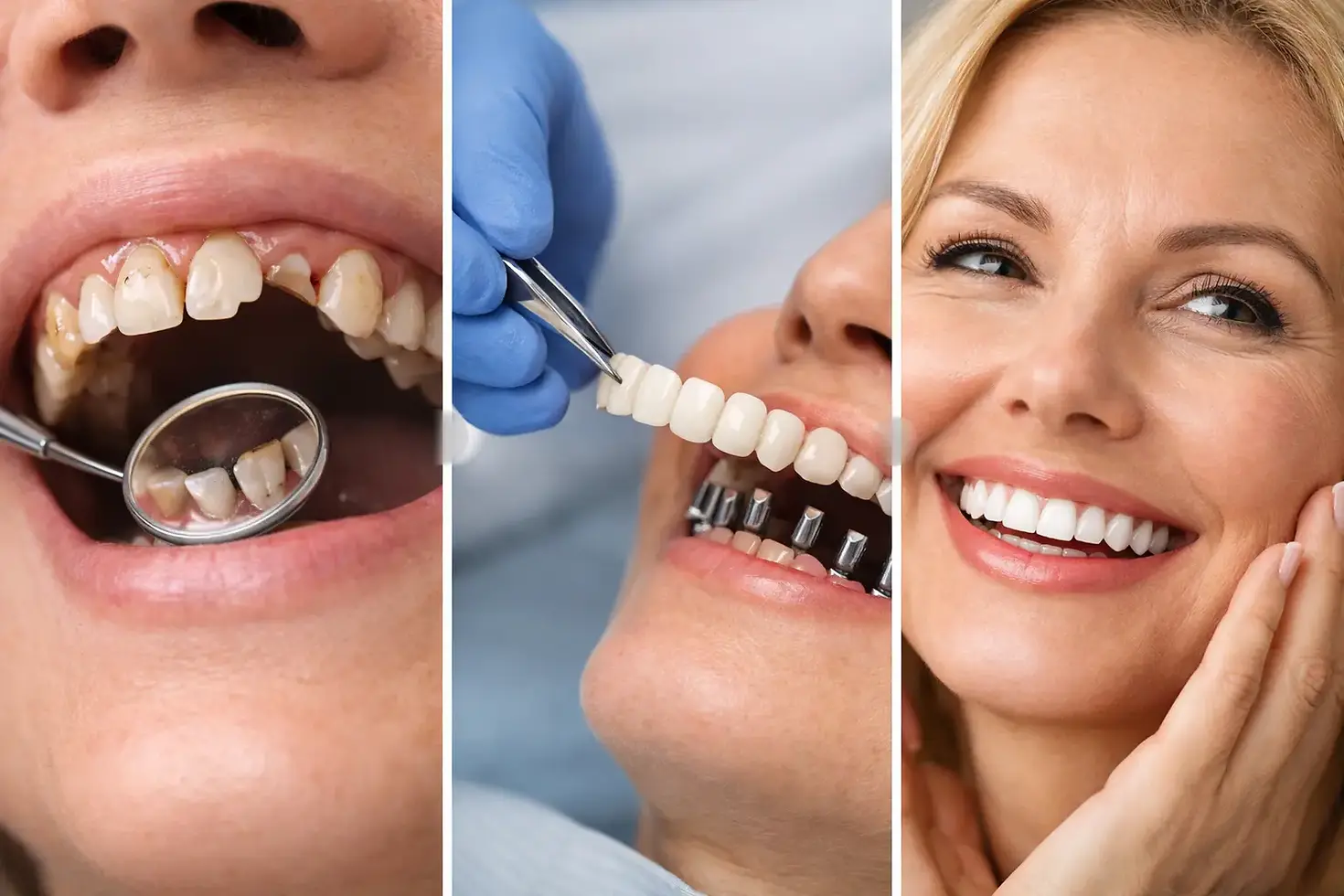
A Full Arch Smile Makeover Example, Step by Step

A full arch smile makeover example is not just about replacing teeth that show when you smile. For many patients, it starts with a much bigger problem: avoiding favorite foods, hiding their mouth in photos, dealing with loose dentures, or worrying that another tooth will break at the wrong moment. A full-arch restoration is designed to change that daily reality with a stable, natural-looking smile built for function as well as appearance.
Here is what that transformation can look like, why each phase matters, and what can affect your personal treatment plan.
A Full Arch Smile Makeover Example: From Failing Teeth to a Fixed Smile
Consider a typical patient in their late 50s or early 60s who has spent years managing failing teeth in the upper arch. Several teeth are missing. Others have large fillings, old crowns, gum problems, or repeated infections. They may wear a partial denture but find it uncomfortable, unstable, and difficult to eat with.
At this stage, patching one tooth at a time can feel like an expensive cycle with no real finish line. The patient wants to smile freely at work, enjoy dinner without checking whether a denture has shifted, and stop planning life around dental pain.
After a comprehensive evaluation, the care team may determine that the remaining upper teeth cannot be predictably saved long-term. Instead of placing a separate implant for every missing tooth, the patient chooses a full-arch implant restoration. This treatment uses strategically placed dental implants to support a complete set of new teeth across the upper jaw.
The goal is not a generic, overly white smile. It is a smile that fits the patient’s face, lip line, skin tone, and personality while restoring the ability to bite, speak, and laugh with more confidence.
What the Starting Point Often Looks Like
A full arch case can begin in many ways. Some patients have advanced tooth decay or periodontal disease. Others have worn down their teeth after years of grinding. Some have an old bridge or denture that no longer feels secure. Even people who appear to have teeth in place may be dealing with pain, mobility, infection, or poor function underneath the surface.
The consultation is where the real picture becomes clear. Your dentist reviews your health history, takes digital images and 3D scans, examines the gums and bite, and discusses what you want to change. You should be able to speak openly about your concerns without feeling judged - including anxiety about treatment, fear of discomfort, or questions about financing.
This planning stage also identifies whether additional support is needed. If bone has been lost after years of missing teeth, bone grafting may be recommended. Not every patient needs it. In some cases, implant positioning and available bone make it possible to move forward without grafting. The answer depends on your anatomy, not a one-size-fits-all promise.
Designing a smile that looks like you
Before treatment begins, smile design decisions matter. Patients often bring in a favorite old photo or explain that they want teeth that look healthier but still natural. The team considers tooth shape, length, shade, facial proportions, and how much tooth shows when you speak and smile.
A great full-arch result should not look bulky, flat, or artificial. It should support the lips, create balanced proportions, and look believable in everyday conversation - not only in a before-and-after photo.
The Treatment Day: Removing What Cannot Be Saved
In this full arch smile makeover example, the remaining upper teeth are removed because they have a poor long-term outlook. Dental implants are then placed in carefully planned positions within the jawbone. Depending on the case, a temporary fixed bridge may be attached the same day or shortly after surgery.
That temporary bridge is a major emotional turning point for many patients. Instead of leaving with an empty smile, they leave with teeth that look complete. It also gives the gums time to heal while the implants begin bonding with the bone.
Sedation options can make treatment more manageable for patients who feel nervous. Your clinical team will explain what is appropriate based on your medical history and the complexity of your procedure. Most patients are surprised by how planned and controlled the experience feels once they understand each step.
There is still a recovery period. Swelling, tenderness, and dietary restrictions are normal after surgery. During early healing, patients usually stick to softer foods and follow instructions closely to protect the implants. This is not the time to test a new smile with a steak or crunchy bagel. Healing well is part of achieving a strong, lasting result.
Healing Is Where the Foundation Takes Hold
Dental implants need time to integrate with the jawbone. This process, called osseointegration, creates the stable foundation that makes implant-supported teeth feel more secure than removable dentures.
The temporary teeth are functional, but they are not the final set. During healing, the dental team monitors the gums, bite, and implant stability. Small adjustments may be made to keep the temporary bridge comfortable and to help the tissues develop naturally around the restoration.
For the patient in this example, the change is already meaningful. They can go to meetings without covering their mouth. They can order food with less anxiety. They no longer have to keep adhesive, spare denture supplies, or mints on hand to feel prepared for social situations.
That said, implants are not maintenance-free. Daily home care and regular professional visits remain essential. A full arch restoration can be a long-term solution, but its success depends on healthy habits, regular monitoring, and protecting the investment you made in your smile.
The Final Teeth: Strength, Detail, and Comfort
Once healing is complete, the temporary bridge is replaced with the final full-arch prosthesis. This is where the cosmetic details become especially important. The final teeth are made to provide greater durability, refined aesthetics, and a bite that feels balanced.
Your dentist checks the fit, bite pressure, speech, and overall appearance. A slight adjustment can make a major difference in comfort. The patient may need a short period to get used to speaking and chewing with their new teeth, especially if they have lived with missing or loose teeth for years. That adjustment is normal.
The final result in a successful full arch smile makeover is often striking, but the best compliments are usually subtle: “You look rested,” “You seem happier,” or “Did you do something different?” The patient looks like themselves - just healthier, more confident, and no longer held back by their teeth.
What Makes One Full-Arch Result Different From Another
No two patients start in the same place, so no two plans should look exactly alike. Your timeline, number of implants, need for extractions, bone grafting, sedation, and the material selected for final teeth can all affect the process and cost.
A patient with healthy bone and no active infection may be eligible for a more streamlined approach. Someone with extensive bone loss, uncontrolled gum disease, smoking-related risks, or certain health conditions may need treatment in phases. That does not mean a new smile is out of reach. It means honest planning matters.
Cost is another real concern. A full-arch restoration is a significant investment because it combines surgical treatment, custom restorations, follow-up care, and advanced planning. A transparent consultation should explain what is included, what may be additional, and whether monthly financing can make treatment more manageable.
Is a Full-Arch Smile Makeover Right for You?
You may be a candidate if you are missing most or all teeth in one arch, have teeth that are failing beyond repair, struggle with an uncomfortable denture, or want a more stable alternative to removable teeth. The right choice depends on your oral health, goals, budget, and willingness to maintain your restoration after treatment.
At Chosen Implant Studio, the conversation starts with your story, not pressure. A free consultation can help you understand whether a full-arch solution fits your needs, what your treatment path may involve, and how to move forward with clarity.
You do not have to wait until every tooth becomes an emergency. A stronger smile can begin with one honest conversation about what is possible for you.


Comments