
Dental Implant Healing Time Explained

If you are thinking about replacing a missing tooth, one of the first questions you probably have is simple - how long will this take? Dental implant healing time is not the same for every patient, and that is exactly why clear guidance matters. You want a result that looks natural, feels strong, and lasts. That means healing is not something to rush.
For some patients, the early recovery is surprisingly manageable. They are back to work quickly and feel better within a few days. But the full healing process happens in stages, and the timeline depends on your bone, your gums, your overall health, and whether you need extra treatment before the implant can fully support a final tooth.
What dental implant healing time really means
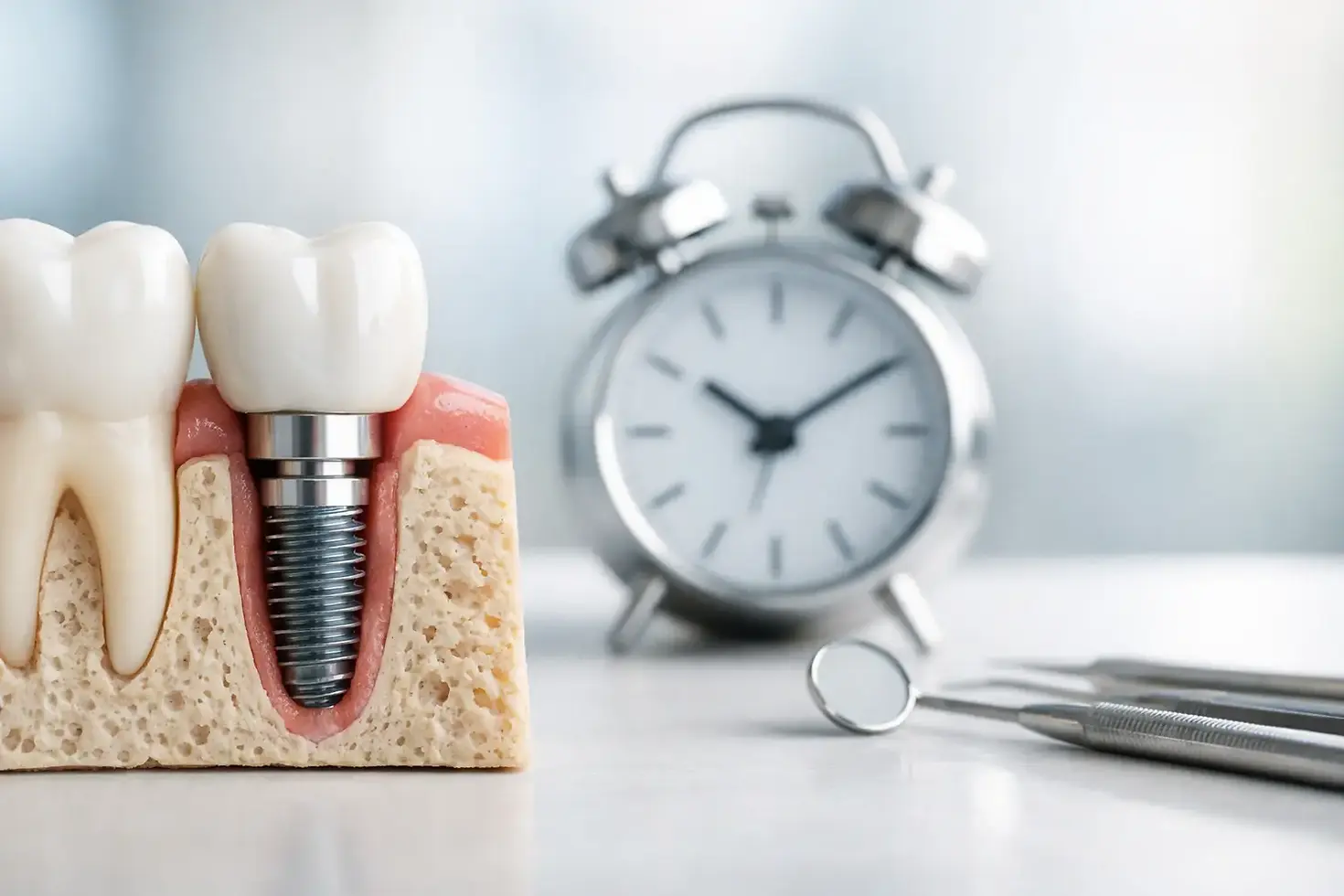
When people hear the word healing, they often think only about soreness or swelling. That is just the first part. The bigger milestone is what happens under the surface, when the implant fuses with your jawbone. This process is called osseointegration, and it is what gives dental implants their long-term strength and stability.
So there are really two timelines to understand. The first is short-term recovery, which usually covers the first few days to two weeks after placement. The second is complete healing, which may take several months before the implant is ready for the next phase of treatment.
That can sound like a long time, but it is also the reason implants feel so secure compared with temporary fixes. You are not just filling a gap. You are rebuilding a foundation.
Average dental implant healing time by stage
For many patients, the first 24 to 72 hours are when swelling, tenderness, and minor bleeding are most noticeable. This part is usually very manageable with post-op instructions, soft foods, and any medications your dentist recommends. Most people can return to normal light activity quickly, though you will want to avoid hard chewing and anything that puts pressure on the surgical area.
Within about one to two weeks, the gums usually look and feel much better. If stitches were used, they may dissolve on their own or be removed at a follow-up visit. At this stage, many patients feel like they are basically healed. Clinically, though, the deeper healing is still happening.
Bone integration often takes around three to six months. In some straightforward cases, it may move a little faster. In more complex cases, especially when bone grafting is involved, it can take longer. Once the implant is stable enough, the next step may be placing the abutment and the final crown, bridge, or full-arch prosthesis.
That is why a realistic answer to the healing question is this: you may feel good within days, but the complete dental implant healing time is often measured in months.
Why healing time varies from person to person
No two mouths heal exactly the same way. A patient replacing one tooth with strong bone and healthy gums may move through treatment much faster than someone who has had missing teeth for years and needs grafting first.
Bone quality is one of the biggest factors. If the jawbone is dense and healthy, the implant may stabilize more predictably. If the bone has shrunk over time, your dentist may recommend a bone graft to build support before or during treatment. That extra step can add healing time, but it can also make the final result much stronger.
Your general health matters too. Smoking, uncontrolled diabetes, certain medications, and active gum disease can slow healing and raise the risk of complications. This does not always mean you are not a candidate. It means your treatment plan needs to be honest, customized, and built around the safest path to success.
Even the location of the implant can matter. Some parts of the mouth have different bone density and bite pressure, which can affect how the case is planned and how long healing takes.
Can you get teeth right away?
Sometimes, yes. But this is where expectations need to be clear.
Some patients qualify for immediate-load treatment, meaning a temporary tooth or temporary arch can be placed very soon after surgery. This can be a great option for appearance and confidence, especially in visible areas. It does not mean the implant is fully healed overnight. It means the treatment is carefully designed so you do not have to walk around with a visible gap while the deeper healing continues.
Other patients are better served by a delayed approach. That can feel less exciting at first, but in certain cases it is the smarter move. If there is not enough primary stability, if bone grafting is involved, or if bite forces are a concern, giving the implant more time before final restoration may protect the outcome.
The best timeline is not the fastest one. It is the one that gives you the best chance at a stable, lasting smile.
What recovery feels like in real life
Most patients are relieved to find that implant recovery is easier than they expected. You may feel soreness, pressure, or mild swelling, especially in the first few days. If an extraction was done at the same time, that area may add to the discomfort. But for most people, this phase is manageable and temporary.
You will usually be told to stick with softer foods at first and avoid chewing directly on the implant site. Hot foods, hard foods, alcohol, smoking, and intense exercise may also be limited for a short period. These instructions are not about making recovery harder. They are there to protect the healing process while the area is still vulnerable.
Good home care matters. Keeping the mouth clean without disturbing the surgical site helps lower the risk of infection. Follow-up appointments matter too, because healing is not judged by feel alone. An implant can seem fine from the outside while your dentist is checking the deeper stability over time.
What can slow down dental implant healing time
Healing does not always move in a straight line. Sometimes it takes longer than expected, and that does not automatically mean something is wrong. Still, there are a few common reasons timelines stretch out.
Smoking is a major one because it reduces blood flow and can interfere with bone and gum healing. Skipping aftercare instructions can also create setbacks, especially if too much pressure is placed on the implant too soon. Poor oral hygiene, untreated gum issues, and certain medical conditions can slow progress as well.
There is also the simple reality that complex treatment takes more time. A full-arch case, multiple implants, or a case involving extractions and grafting is not on the same timeline as a single straightforward implant. That is not bad news. It just means your treatment needs to be planned with precision.
How to support a better recovery
The good news is that patients have more control than they think. The basics make a real difference: follow your post-op instructions closely, take medications exactly as directed, keep your follow-up visits, and be honest about your health history and habits.
If you smoke, even cutting back around surgery is better than doing nothing, though quitting is the strongest move for healing. Choose soft, nourishing foods in the early phase. Rest when your body asks for it. And do not compare your recovery to someone else's. Fast healing is great, but stable healing is what really matters.
Choosing an experienced implant provider also matters more than many people realize. Careful planning, proper placement, and a customized timeline can reduce complications and give you a smoother recovery from the start. At Chosen Implant Studio, that patient-first approach is a big part of making treatment feel clear, comfortable, and worth it.
When to call your dentist
Some swelling and soreness are normal. Severe pain that gets worse instead of better is not. Ongoing bleeding, fever, unusual discharge, or an implant area that feels unstable should be checked right away. It is always better to ask early than wait and hope.
A strong implant result comes from good surgery, good healing, and good communication. If something feels off, speak up.
The truth about dental implant healing time is that it asks for some patience up front so you can stop worrying about your teeth later. A few months of healing can lead to years of stronger chewing, easier speaking, and a smile that feels like yours again.




Comments