
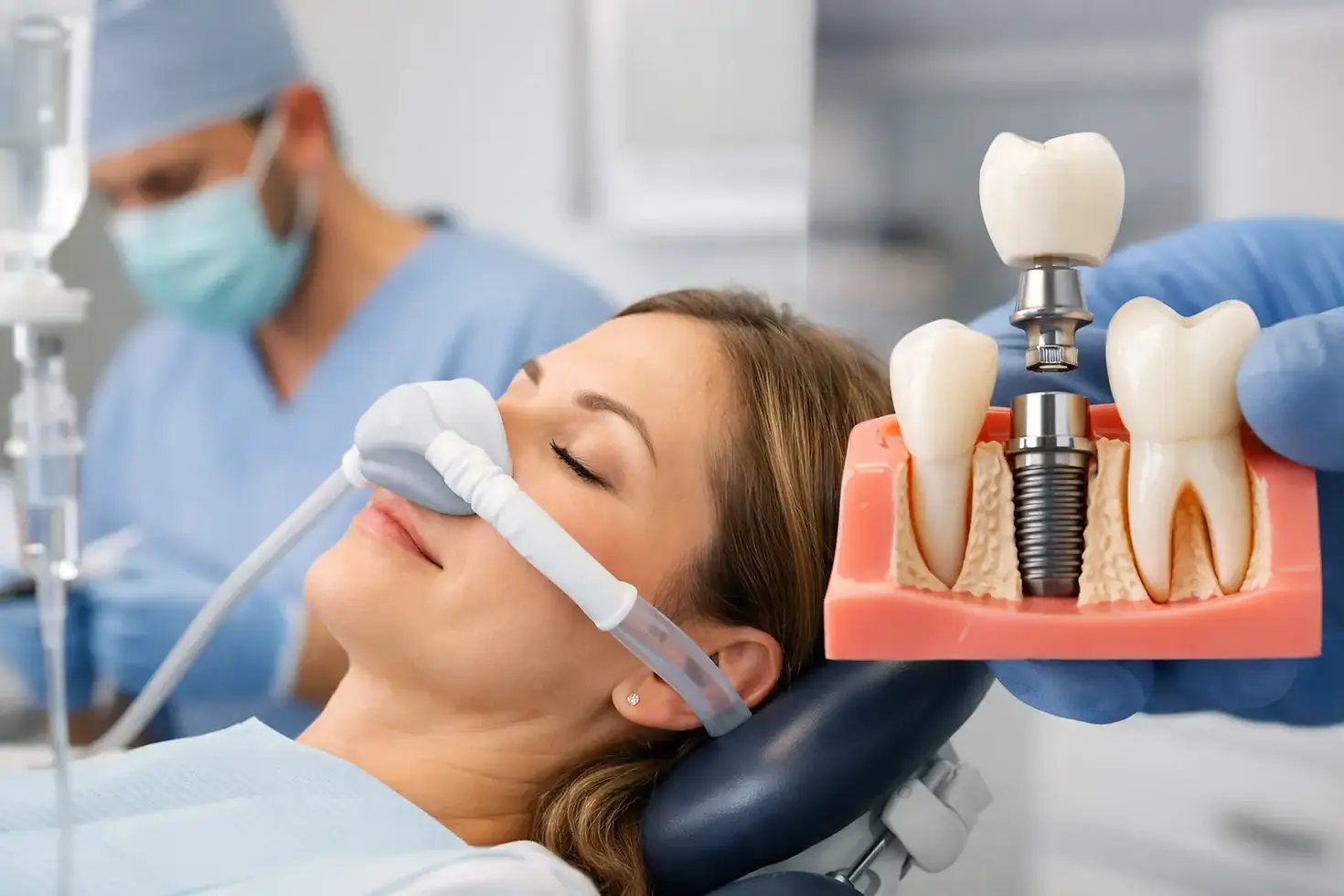
Sedation Dentistry for Implants Explained

If the thought of implant surgery makes your stomach tighten, you are not alone. For many patients, the biggest barrier is not whether implants are worth it - it is whether they can get through the appointment comfortably. That is exactly where sedation dentistry for implants can make a real difference.
Dental implants are one of the most effective ways to replace missing teeth because they restore function, support your bite, and create a natural-looking smile. But even when people want the result, they may still worry about pain, anxiety, gagging, long appointments, or simply feeling out of control in the chair. Sedation helps remove that barrier so treatment feels more manageable, more comfortable, and far less intimidating.
What sedation dentistry for implants actually means
Sedation dentistry for implants refers to using medication to help you stay calm and comfortable during implant treatment. It does not always mean you are fully asleep. In many cases, patients remain relaxed and responsive, but far less aware of the sights, sounds, and stress that usually make dental visits difficult.
That distinction matters because patients often use the word "sedation" to mean different things. Some want help with moderate anxiety. Others have had traumatic dental experiences, have a strong gag reflex, or need more involved care such as multiple implants, extractions, or bone grafting. The right level of sedation depends on the procedure, your health history, and how anxious you feel before treatment even begins.
For some people, local anesthesia alone is enough. For others, adding sedation can completely change the experience from something they have delayed for years into something they finally feel ready to do.
Why patients choose sedation for implant treatment
Implants are a long-term investment in your smile, your comfort, and your confidence. Patients often choose sedation because they want the process to feel as smooth as the result looks.
The most common reason is anxiety, but it is not the only one. Sedation may also help if you are replacing several teeth, getting full-arch implants, sitting through a longer appointment, or having multiple procedures completed in the same visit. It can also be useful if you have trouble getting numb, have a sensitive gag reflex, or struggle to sit still because of stress or discomfort.
There is also a practical side to it. When patients are calm, treatment can often feel easier for everyone involved. You are more comfortable. The dental team can work more efficiently. And what seems overwhelming in your mind beforehand often feels much shorter and simpler once it is over.
Common sedation options for dental implants
Not every office offers the same sedation methods, and not every patient needs the same level of support. That is why your consultation matters.
Nitrous oxide
Nitrous oxide, often called laughing gas, is a mild form of sedation breathed through a small mask. It helps take the edge off anxiety and tends to wear off quickly after the appointment. For patients with mild nervousness or shorter procedures, it can be a good option.
Oral conscious sedation
Oral sedation usually involves taking prescribed medication before your visit. You stay awake, but you feel much more relaxed and may remember less of the procedure. This can be a strong fit for patients with moderate dental anxiety or longer implant appointments.
IV sedation
IV sedation offers a deeper level of relaxation and is often used for more complex implant cases. You are still monitored closely, and many patients feel like the appointment passes in a blur. If you are having multiple implants placed, full-mouth work, or surgical procedures combined in one visit, this may be recommended.
The best choice is not about choosing the strongest option. It is about choosing the safest and most appropriate one for your treatment plan and comfort level.
Will you feel pain during implant surgery?
This is the question most patients ask first, and the honest answer is that implant treatment should not feel painful during the procedure when it is planned properly. Local anesthesia numbs the area being treated, and sedation helps reduce fear, tension, and awareness.
You may feel pressure during surgery, but sharp pain is not the goal and should not be the expectation. After the procedure, some soreness, swelling, or tenderness is normal, especially if extractions or bone grafting are involved. Recovery varies from person to person and from case to case.
A single implant is different from a full-arch case. Someone with strong anxiety may feel that even a simple procedure is overwhelming without sedation, while another patient may be comfortable with numbing alone. That is why one-size-fits-all advice is not very helpful here.
Who is a good candidate for sedation dentistry for implants?
Many adults are candidates, but the answer depends on your medical history, medications, and the type of implant treatment you need. Patients often benefit from sedation if they have dental fear, have been avoiding treatment, need several procedures, or want a more comfortable surgical experience.
That said, sedation is not automatic for everyone. Certain health conditions may affect which option is safest. You may need to discuss blood pressure, sleep apnea, past reactions to medications, pregnancy, or other concerns before a plan is confirmed. This is one reason an in-person or virtual consultation is so valuable - it helps turn uncertainty into a clear, personalized recommendation.
If you have been embarrassed to ask for sedation, do not be. Wanting a calmer experience is not weakness. It is a reasonable part of choosing care that works for you.
What to expect before and after sedation
If you move forward with sedation, you will receive specific instructions based on the type being used. You may be told not to eat or drink for a certain period before treatment. For deeper sedation, you will usually need someone to drive you home and stay with you afterward.
During the appointment, your comfort and safety should be monitored throughout. That includes tracking your vital signs and making sure you remain stable during the procedure. This is one reason experience matters. Implant placement is already a precise treatment, and sedation adds another layer that should be handled with care and proper planning.
Afterward, many patients say the experience was easier than expected. You may feel groggy for a while depending on the medication used. Most post-op instructions focus on rest, food choices, swelling control, and keeping the area clean while it heals.
The trade-off: comfort now, planning ahead later
Sedation offers major benefits, but there are practical trade-offs. You may need extra preparation before the appointment. Deeper sedation usually means arranging transportation and adjusting your schedule for the rest of the day. It may also affect cost depending on the type used and the complexity of your case.
For many patients, that trade-off is worth it because it makes treatment possible. If anxiety has delayed your care for months or years, a more comfortable experience can be the difference between continuing to wait and finally moving forward.
That is especially true with missing teeth. The longer you wait, the more likely you are to face issues like shifting teeth, bite changes, or bone loss that can complicate treatment later. Sedation does not just make the appointment easier. It can help you stop postponing the solution you actually want.
Why the consultation matters so much
The best implant experience starts before any procedure begins. A real consultation should not just tell you the price of treatment. It should answer the questions that actually keep you up at night: Will this hurt? Am I a candidate? What if I am anxious? How long will recovery take? Can I afford this?
That is where a patient-centered practice stands out. At Chosen Implant Studio, the goal is not to pressure you into treatment. It is to help you understand your options clearly, including whether sedation is right for your implant plan, so you can make a confident decision without feeling judged.
For patients in New York City who want a high-end result without a high-pressure experience, that kind of guidance matters. Implant dentistry is about more than replacing teeth. It is about restoring ease in everyday life - eating comfortably, speaking naturally, and smiling without hesitation.
If fear has been the reason you have not taken the next step, sedation may be the piece that changes everything. The right support can make implant treatment feel less like something to survive and more like something finally within reach.
A stronger smile should not be reserved for people who are naturally calm in the dental chair. With the right team, the right plan, and the right level of comfort, getting there can feel a lot more possible than you think.




Comments