
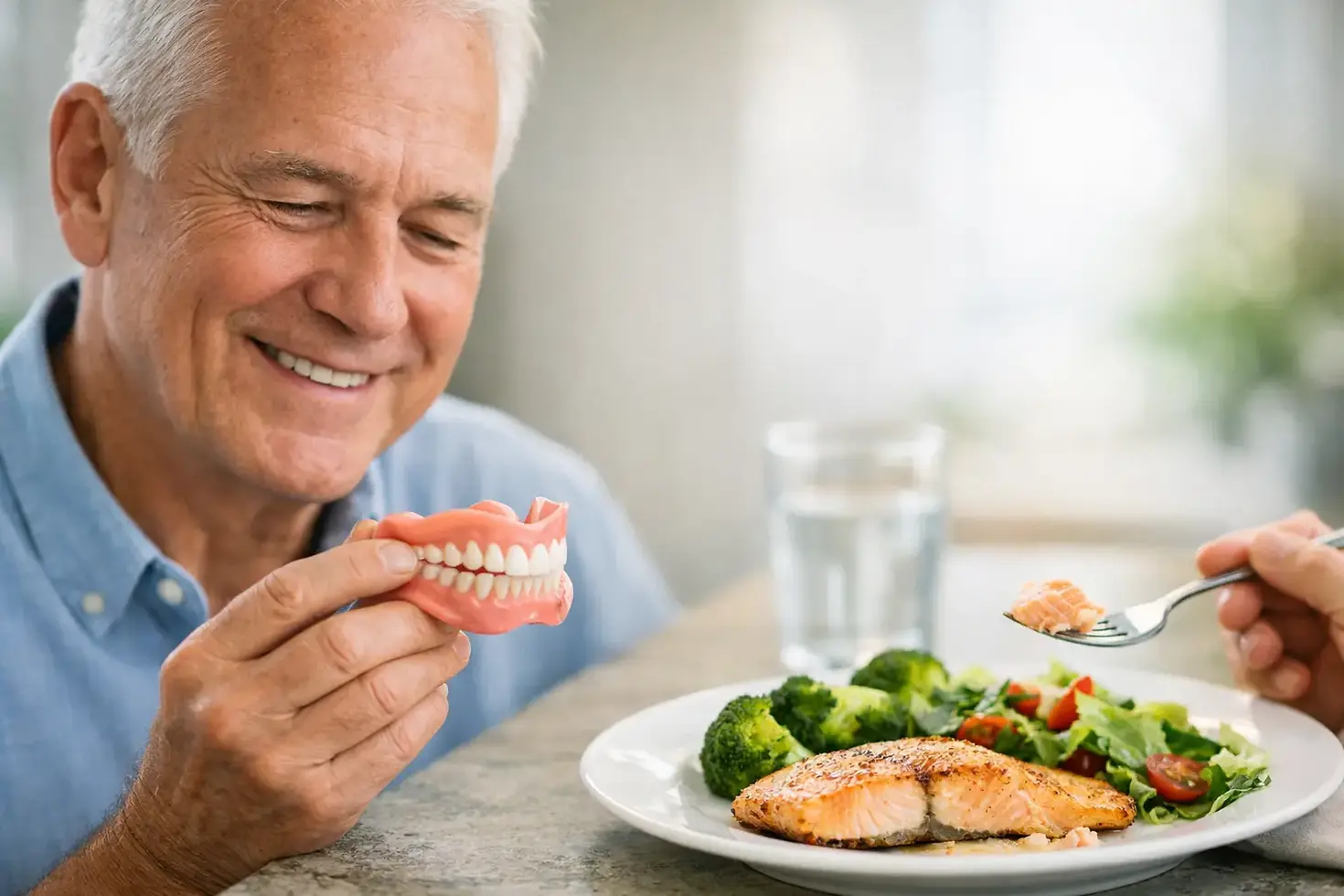
How to Stop Denture Sores and Eat Comfortably

A denture sore can turn a simple meal, conversation, or smile into something you brace yourself for. If you are wondering how to stop denture sores, the first thing to know is this: ongoing pain is not something you should simply accept as part of wearing dentures. A well-fitting denture should support your daily life, not leave you avoiding your favorite foods or hiding your smile.
Most denture sores improve when the pressure causing them is identified and corrected. You can take safe steps for short-term comfort at home, but a dentist should evaluate sores that keep returning, feel severe, or make it hard to wear your dentures.
Why Denture Sores Happen
Denture sores usually develop when a denture rubs, rocks, or presses too hard against a small area of gum tissue. Your gums are soft, while your denture base is firm. When the fit is even slightly off, repeated movement can create a tender red spot, ulcer, or painful swelling.
This can happen with brand-new dentures as your mouth adjusts, but it can also happen years after you received them. Your jawbone and gum tissue naturally change over time, especially after tooth loss. As the ridge beneath a denture shrinks, a once-comfortable appliance can become loose and unstable.
Food trapped under the denture, sleeping in dentures, dry mouth, and less-than-thorough cleaning can also irritate the tissue. In some cases, a yeast infection called denture stomatitis may be involved. This often causes widespread redness, burning, or tenderness beneath an upper denture rather than one isolated pressure point.
The good news is that the cause is usually treatable. The key is not to keep forcing yourself through the discomfort.
How to Stop Denture Sores Safely
Give the sore area a break
If wearing your dentures is causing sharp pain, remove them when you can, especially while at home and before bed. Taking them out overnight gives irritated gum tissue time to recover and lowers the chance of infection. Unless your dentist has given you different instructions after a recent procedure, dentures should generally not be worn around the clock.
Do not stop wearing them for several days before an adjustment appointment without asking your dentist. The dentist may need to see exactly where the denture is rubbing. Often, wearing them for a few hours before your visit makes those pressure areas easier to locate.
Rinse gently with warm salt water
A warm salt-water rinse can soothe irritated tissues and help keep the area clean. Mix about half a teaspoon of salt into a cup of warm water, swish gently, and spit it out. Repeat a few times a day as needed.
Avoid harsh mouth rinses that contain alcohol if the tissue feels raw. They can sting and may worsen dryness. If you use an over-the-counter gel for mouth pain, follow the label carefully and view it as temporary comfort, not a solution to a poor fit.
Clean your dentures every day
Plaque, food particles, and yeast can collect on dentures just as they do on natural teeth. Remove and rinse your dentures after eating when possible. Brush them daily with a soft denture brush and a cleaner made for dentures, then rinse thoroughly before putting them back in your mouth.
Regular toothpaste can be too abrasive for some denture materials, creating tiny scratches where bacteria can build up. Also brush your gums, tongue, and the roof of your mouth gently with a soft toothbrush. A clean mouth is less likely to stay inflamed.
Choose softer foods while you heal
For a day or two, avoid foods that demand heavy chewing or have sharp edges, such as crusty bread, chips, nuts, and tough meat. Choose softer options like eggs, yogurt, fish, cooked vegetables, oatmeal, soups, and smoothies.
This is not a long-term eating plan. It is simply a way to reduce pressure while a sore settles and you arrange professional care. If your dentures repeatedly limit what you can eat, the issue is bigger than one sore spot.
Use denture adhesive carefully
A small amount of adhesive may help a loose lower denture feel more secure for a short period. It can reduce movement and keep food from slipping underneath. But adhesive cannot fix a warped denture, a major bite problem, or a mouth that has changed significantly.
If you need more and more adhesive to get through the day, treat that as a sign to schedule an exam. Never use household glue or attempt a home repair. These products can damage the denture, irritate your tissues, and make a professional repair more difficult.
When a Denture Adjustment Is the Real Answer
One small adjustment can make an enormous difference. During a denture visit, a dentist can identify the exact areas creating pressure, smooth or reshape them, and check whether your bite is balanced. If your teeth meet unevenly, each bite can make the denture shift and drive it into your gums.
For dentures that have become loose over time, a reline may be appropriate. A reline reshapes the inside surface so it matches your current gums more closely. If the denture is cracked, excessively worn, or no longer supports your facial appearance and bite properly, replacement may be the smarter investment.
Do not try to file down the denture yourself. Even a small change can throw off the fit, create new sore spots, and affect the way you bite. A denture should be adjusted with clinical precision, not guesswork.
Signs You Should See a Dentist Promptly
A pressure sore often improves once the rubbing stops. Still, some symptoms deserve faster attention. Contact a dental professional if a sore lasts longer than two weeks, keeps returning in the same place, bleeds easily, or gets larger. You should also be seen if you have swelling, fever, pus, persistent burning, white patches, or difficulty swallowing.
Pain is your mouth’s way of asking for attention. It does not automatically mean something serious is wrong, but it should not be ignored. An exam can rule out infection, identify fit problems, and protect the health of your gums and jaw.
Preventing Denture Sores From Coming Back
The best prevention is a denture that fits well and receives regular professional checkups. Even if you no longer have natural teeth, your mouth still needs routine dental care. Your dentist can check your gum tissue, screen for oral health concerns, evaluate the fit of your denture, and catch wear before it becomes painful.
Take your dentures out at night unless instructed otherwise. Store them in water or a denture-soaking solution so they do not dry out and change shape. Handle them over a folded towel or a sink partly filled with water because dropping them can cause cracks that affect fit.
Dry mouth deserves attention too. It can make dentures feel rougher and less stable. Sipping water regularly, reviewing medications with your healthcare provider, and asking your dentist about dry-mouth options may help. If you smoke, quitting can also improve tissue healing and reduce irritation.
When Loose Dentures Point to a Bigger Solution
For some people, adjustments and relines provide excellent comfort. For others, dentures continue to shift, rub, and limit confidence because the underlying jawbone has changed too much. That is where implant-supported dentures may offer a more stable path forward.
Dental implants are placed in the jawbone and can secure a denture so it moves far less during eating and speaking. Depending on your needs, implants may support a removable overdenture or a fixed full-arch restoration. The right option depends on your bone health, medical history, goals, and budget, which is why a personalized consultation matters.
At Chosen Implant Studio, patients can discuss whether a better-fitting denture, a reline, or implant-supported restoration makes the most sense for the smile and lifestyle they want. You deserve clear answers, a judgment-free conversation, and a treatment plan built around feeling comfortable again.
A sore spot may seem small, but being able to eat, speak, laugh, and smile without bracing for pain can change the way every day feels. Listen to what your mouth is telling you and give yourself permission to seek a fit that feels better.


Comments