
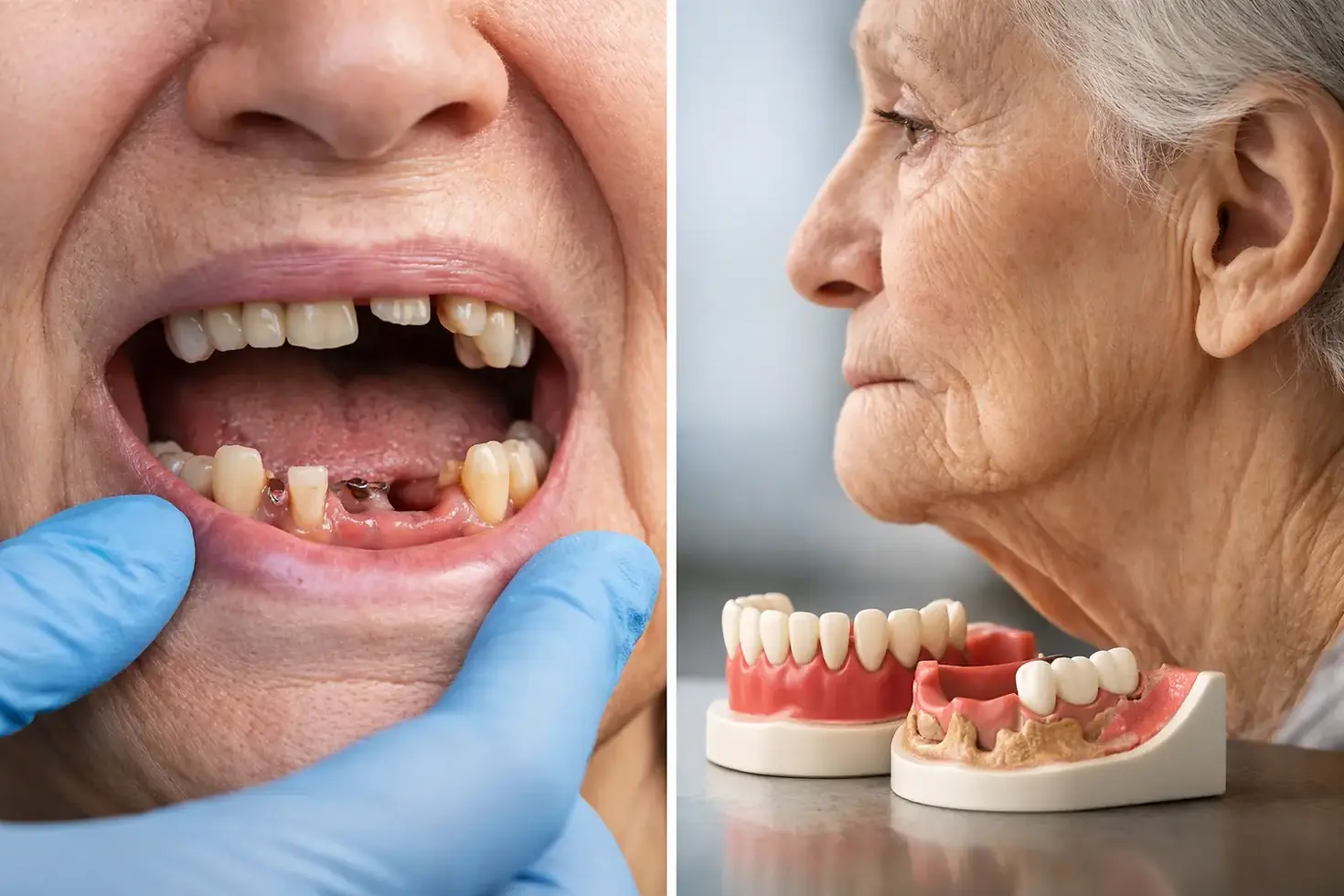
Missing Teeth and Facial Collapse Explained

You may notice it first in photos. The lower face looks shorter, the lips seem thinner, and the cheeks lose support. For many adults, missing teeth and facial collapse are not just cosmetic concerns. They are signs that the structures supporting your smile, bite, and facial shape are starting to change.
That can feel unsettling, especially if you have been told tooth loss is "just part of aging." It is not. When teeth are missing, the jawbone no longer gets the stimulation it needs, and the face can gradually lose the support that keeps it looking full, balanced, and youthful. The good news is that this process can often be slowed, managed, and in many cases improved with the right treatment plan.
How missing teeth affect your face
Your teeth do more than help you chew and smile. They act like support pillars for the lower part of your face. The roots of natural teeth stimulate the jawbone every time you bite and chew, which helps the bone stay strong.
Once a tooth is lost, that stimulation stops in the area where the root used to be. Over time, the bone begins to shrink. This is called bone resorption. It can happen after one missing tooth, but it becomes much more noticeable when several teeth are missing or when someone has been without teeth for years.
As the jawbone loses volume, the soft tissues above it lose support too. That is when changes in appearance can become obvious. The mouth may look like it is sinking inward. Wrinkles around the lips can deepen. The chin can appear closer to the nose. In more advanced cases, the whole lower face can take on a collapsed look.
What facial collapse actually looks like
Facial collapse does not happen overnight. It is usually gradual, which is why many people do not connect the changes in their appearance to missing teeth until the difference becomes hard to ignore.
Common signs of missing teeth and facial collapse
A person may notice a sunken-in look around the mouth, flatter cheeks, deeper smile lines, thinning lips, or a jawline that seems less defined. Some people say their face looks older, tired, or shorter than it used to. Others feel like their dentures no longer fit the way they once did.
These changes are not only about looks. As the bite shifts and support is lost, speaking and chewing can become harder too. Food choices may get more limited. Dentures may feel less stable. Confidence often takes a hit long before someone says it out loud.
Why dentures alone may not stop facial collapse
Traditional dentures can replace the look of teeth, but they do not replace the tooth roots. That matters. Since they sit on top of the gums rather than integrating with the jawbone, they do not provide the same bone-preserving stimulation that natural roots or dental implants can provide.
This is one reason denture wearers often need relines, adjustments, or replacements over time. As the bone changes shape underneath, the denture has less to hold onto. A denture can restore part of the smile, but it may not fully stop the underlying process that contributes to facial collapse.
That does not mean dentures are the wrong choice for everyone. They can be a practical option depending on health, budget, and treatment goals. But if preserving facial structure is a priority, it is worth having a more complete conversation about long-term solutions.
Can one missing tooth change your face?
Sometimes yes, but it depends on the location of the tooth, how long it has been missing, and your individual bone health. A single missing back tooth may not dramatically change face shape right away, but the bone in that area can still shrink. Nearby teeth can begin to shift, and the bite can change over time.
If multiple teeth are missing, or if front teeth are involved, the visual effect tends to be more significant. The longer the teeth have been missing, the more likely there has been measurable bone loss. That is why early treatment matters. Waiting does not usually make the problem simpler.
The biggest risk factor is time
One of the most frustrating parts of tooth loss is that the damage does not stop once the tooth is gone. The clock starts immediately. Bone loss can begin within the first several months after an extraction, and the process can continue for years.
Not everyone loses bone at the same rate. Some patients maintain more structure than expected, while others see faster changes due to gum disease, infection, smoking, denture wear, or overall health factors. But in general, the longer a tooth is missing, the more likely there will be some level of collapse in the bone and surrounding facial support.
The treatments that can help restore support
If you are worried about facial collapse, the right treatment depends on how many teeth are missing, how much bone has been lost, and what kind of outcome you want. This is where a personalized exam matters. Two people with the same number of missing teeth can need very different solutions.
Dental implants
Dental implants are often considered the gold standard because they replace both the visible tooth and the root structure beneath the gumline. The implant post integrates with the jawbone, which helps preserve bone in a way other tooth replacement options cannot match.
For someone missing one tooth, an implant can help maintain the contour of the bone and prevent neighboring teeth from shifting. For someone missing many teeth, multiple implants or a full-arch solution can restore bite support, facial balance, and confidence in a much more stable way than removable options alone.
Bone grafting
If bone loss has already happened, bone grafting may be recommended before or during implant treatment. This can rebuild enough structure to support an implant and improve the final esthetic result.
Some patients hear "bone graft" and assume they are no longer a candidate. That is often not true. In many cases, bone grafting is exactly what makes treatment possible. It can add time to the process, but the trade-off is a stronger foundation and better long-term support.
Implant-supported dentures
For patients who want more security than a traditional denture, implant-supported dentures can be a strong middle ground. They use implants for added retention and support, which often improves comfort, chewing power, and confidence.
Depending on the design, they may also help reduce further bone loss compared with removable dentures alone. They are not identical to a full fixed bridge, so expectations should be discussed clearly, but for the right patient they can be life-changing.
What if you have been missing teeth for years?
You should still get evaluated. Many people assume they waited too long or that facial collapse means they are out of options. That is rarely the full story.
Even if bone has shrunk, modern implant dentistry offers solutions for many patients who were once told no. The key is getting a clear diagnosis with imaging and a treatment plan built around your anatomy, budget, and goals. At Chosen Implant Studio, that conversation is designed to be straightforward, judgment-free, and focused on what is actually possible for you.
Does treatment make your face look normal again?
This depends on how much support has been lost and which treatment is used. Replacing missing teeth can often improve lip support, lower-face proportions, and overall facial harmony. In some cases, the difference is subtle but meaningful. In others, it is dramatic.
What matters most is setting realistic expectations. Dental implants can preserve and restore support, but they are not the same as a facelift or cosmetic filler. If severe bone loss has been present for a long time, improvement may be significant without being a complete return to your old facial shape. The right provider will be honest about that.
Still, patients are often surprised by how much stronger, healthier, and more like themselves they look once missing teeth are properly replaced.
When to take the next step
If you are noticing a sunken smile, changes in your bite, or a face that seems older than it should, do not brush it off. Missing teeth and facial collapse are connected, and early action gives you more options.
You do not need to figure it all out on your own before scheduling a consultation. You just need to know that tooth loss affects more than your smile, and that restoring support can change the way you eat, speak, and feel every day. A confident smile starts with a strong foundation, and it is never too soon to protect it.


Comments